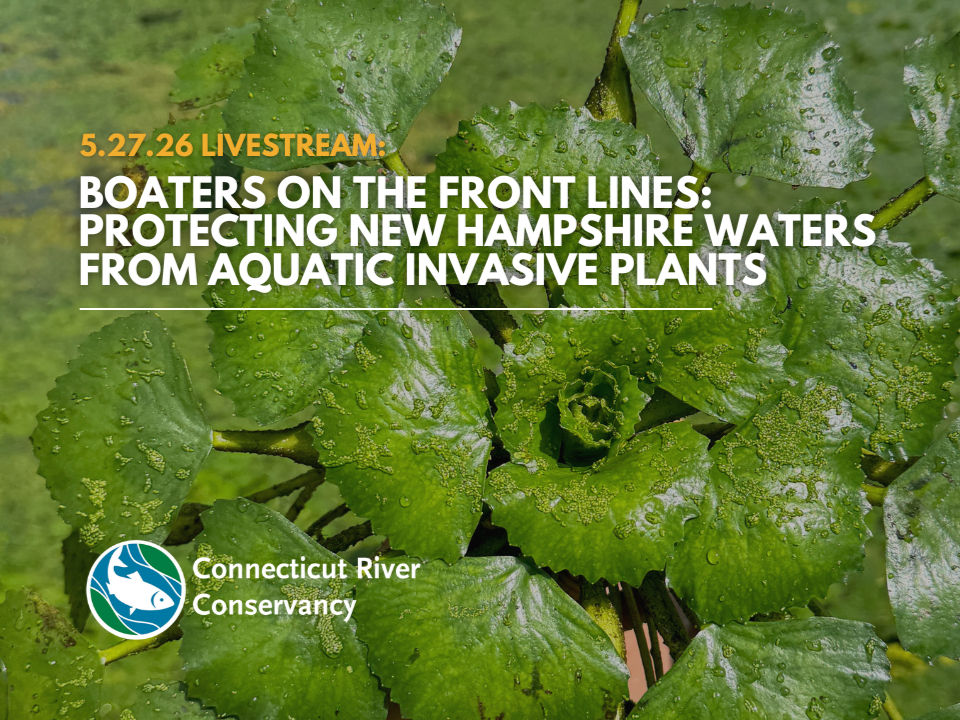
Protecting the Connecticut River Through Prevention and Early Detection of Aquatic Invasive Species

The Connecticut River Conservancy (CRC) is working to keep the Connecticut River healthy, accessible, and enjoyable for everyone who lives, works, and recreates along its waters. This summer, CRC worked to expand efforts to prevent the spread of aquatic invasive species in Vermont and New Hampshire. Our aquatic Invasive Species (AIS) program worked to increase AIS awareness, spread prevention, and early detection in along the stretch of river between Springfield, VT and Hinsdale, NH. Our field staff focused on boater surveys, courtesy boat checks, and surveying aquatic plants in portions of the Connecticut River main stem for any new aquatic invasive species.
Increased awareness and early detection are critically effective tools to reduce the negative impact of non-native aquatic plants that are listed as invasive. In 2026, CRC worked with funding and training support from the Vermont Department of Environmental Conservation (DEC) Aquatic Nuisance Control (ANC) Grant-in-Aid Program. Both this grant and DEC led trainings for the Vermont Public Access Greeter Program and Vermont Invasive Patrollers Program helped to launch our programming for the first year in Vermont.

One of the most visible parts of this work was CRC's participation in Vermont's Public Access Greeter Program. Through this program, trained staff met boaters at public access sites, inspected boats, trailers, and equipment, and shared aquatic plant spread prevention information such as "Clean, Drain, Dry." These interactions help stop invasive plants and animals from hitching a ride between waterbodies and empower boaters to help reduce spread. CRC staff completed 85 boater surveys at Hoyts Landing in Springfield, VT and Old Ferry Rd in Brattleboro, VT.
The grant also supported aquatic plant surveys focused on confirming the status known and new aquatic invasive plants in the Connecticut River. Starting in July, CRC staff surveyed areas just off the Connecticut River main stem that are best accessed by kayak, including coves, tributary mouths, wetlands, and boat access areas that provide ideal habitat for aquatic invasive plants. Survey locations included areas such as Hoyts Landing Cove, Herricks Cove, Clay Brook, Dickerson Brook, Catsbane Brook, and other connected backwaters and tributaries. These areas often contain dense aquatic vegetation, warmer slow-moving water, and regular boating activity, making them important locations for these preventative, early detection surveys.

Finding invasive species early is one of the most effective and cost-efficient ways to protect
waterways because it provides managers with information they need to make decisions about how and when to act before a species becomes too widespread. This is especially important for hydrilla, an aggressive aquatic plant that has been found in the southern areas of the Connecticut River watershed and can grow into dense underwater stands that interfere with recreation, navigation, fish and wildlife habitat, and water flow. Currently, hydrilla is not found north of Agawam, MA and surveys completed this year have confirmed that continues to be the case.
By combining prevention at boat launches with targeted early detection surveys, CRC is helping protect the ecological health and recreational value of the Connecticut River. CRC is grateful to the Vermont Department of Environmental Conservation and the Aquatic Nuisance Control Grant-in-Aid Program for supporting this work. We look forward to continuing to provide these prevention and early detection programs in Vermont & New Hampshire in future summers.